

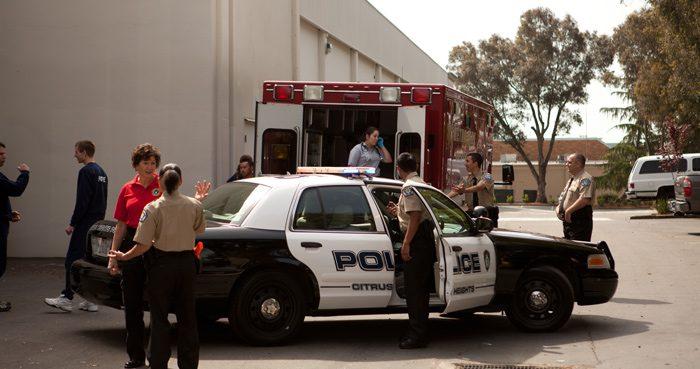
Police Emergency Training
Tactical Emergency Medical First Aid for Law Enforcement Officers
Law enforcement officers are often the first to arrive at the scene of violent incidents, active threats, and critical emergencies. In these high-risk environments, the ability to provide immediate life-saving medical care can make the difference between life and death.
American Health, in collaboration with its expert partners, offers a comprehensive Three-Day Tactical Emergency Medical First Aid Training Program specifically designed for law enforcement professionals. This specialized course equips officers with the knowledge, skills, and confidence required to respond effectively to life-threatening injuries, including severe bleeding and chest trauma that may compromise breathing.
Upon successful completion of the program, participants receive a Certificate of Completion recognizing their achievement and preparedness in tactical emergency medical response.
Program Goal
Tactical Emergency Medical First Aid—also known as Tactical Emergency Casualty Care (TECC) or Care Under Fire—enables law enforcement officers to provide immediate medical intervention during and after deadly force encounters.
The program focuses on preventing potentially avoidable deaths resulting from:
- Severe external bleeding
- Penetrating trauma
- Gunshot wounds
- Chest injuries affecting respiration
- Tactical operational injuries
By learning proven, evidence-based medical techniques, officers can provide critical care to themselves, fellow officers, or injured civilians before advanced medical personnel arrive.
Why Tactical Medical Training Matters
Research and operational experience have demonstrated that rapid intervention during the first minutes following traumatic injury significantly increases survival rates.
Advances in combat medicine and tactical response have provided law enforcement professionals with practical tools and procedures that can:
- Prevent death from catastrophic bleeding
- Improve casualty survival rates
- Enhance officer preparedness during critical incidents
- Strengthen operational readiness and public safety
- Support effective casualty management in high-threat environments
Timely application of hemorrhage control techniques and emergency wound management can preserve life during the critical moments immediately following injury.
Program Overview
Duration
3 Days
Target Audience
This program is designed for:
- Police Officers
- Tactical Response Teams
- SWAT Personnel
- Specialized Law Enforcement Units
- Security and Protective Service Personnel
- Public Safety Officers
Training Oversight
The program is delivered under the guidance and oversight of the Ohio Tactical Officers Association (OTOA), a recognized leader in promoting tactical emergency medical training for law enforcement agencies across the United States.
The OTOA supports program quality and provides a Certificate of Completion to participants who successfully complete the course requirements.
Core Learning Outcomes
Participants will develop practical skills to assess and manage life-threatening injuries in tactical environments.
Combat Application Tourniquet (CAT)
Participants will learn:
- When a tourniquet is indicated
- Proper tourniquet application techniques
- Rapid hemorrhage control procedures
- Self-aid and buddy-aid methods
- Prevention of life-threatening blood loss
Hemostatic Dressings and Wound Packing
Participants will learn:
- Identification of severe bleeding injuries
- Selection and use of hemostatic agents
- Effective wound-packing techniques
- Junctional hemorrhage management
- Monitoring and reassessment of casualties
Vented Chest Seal Application
Participants will learn:
- Recognition of penetrating chest trauma
- Signs and symptoms of compromised breathing
- Proper placement of vented chest seals
- Management of open chest wounds
- Prevention of tension pneumothorax and respiratory deterioration
Key Program Benefits
Upon completion, officers will be able to:
- Provide immediate life-saving medical interventions
- Control severe bleeding using proven tactical methods
- Treat traumatic chest injuries in operational environments
- Apply self-aid and partner-aid techniques under stress
- Improve casualty survival during critical incidents
- Integrate medical response into tactical operations
- Enhance overall officer and public safety
Building Safer Communities Through Preparedness
The first few minutes after a traumatic injury are often the most critical. By equipping law enforcement officers with tactical emergency medical skills, agencies can significantly improve outcomes for injured officers, civilians, and community members during emergency situations.
American Health is committed to supporting law enforcement professionals through high-quality, evidence-based training that enhances operational readiness, strengthens emergency response capabilities, and ultimately helps save lives.
Protect. Respond. Save Lives.
Prepare your officers with the skills and confidence to deliver immediate life-saving care when every second counts.