EMT / Paramedics – Train the Trainer Program
“Give a person a fish, and you feed them for a day; teach them how to fish, and you feed them for a lifetime.” This philosophy serves as the foundation of American Health’s Train the Trainer Program, designed to develop the next generation of EMS educators, clinical instructors, and emergency response leaders.
While American Health offers a wide range of continuing education and professional development programs for healthcare organizations, the Train the Trainer Program is one of its most impactful initiatives. Specifically designed for EMTs and Paramedics, this program equips experienced emergency medical professionals with the knowledge, teaching methodologies, and leadership skills required to effectively train and mentor others.
By developing instructional expertise among hospital staff and emergency responders, healthcare organizations can build sustainable training capacity, strengthen workforce competency, and foster a culture of continuous learning and clinical excellence. The program also promotes effective teamwork, communication, and collaboration—critical elements in delivering high-quality emergency and pre-hospital care.
Program Structure
Offered onsite throughout the Middle East, with an optional clinical internship in the United States, the Train the Trainer Program spans approximately 4 to 6 months and combines classroom instruction, simulation-based learning, and real-world clinical experience.
Part 1: Lecture, Laboratory, and Simulation Training
Duration: 70 Days
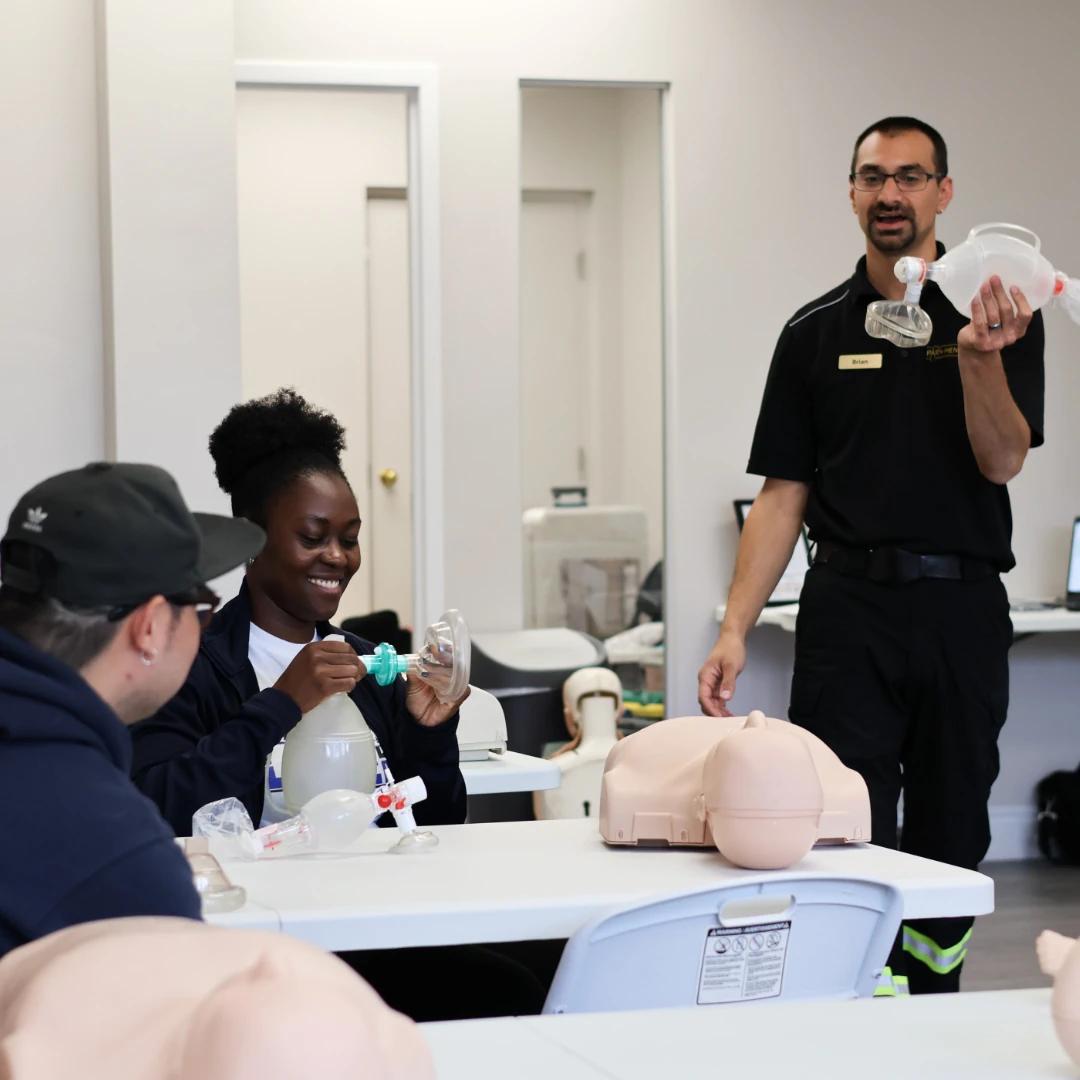
Participants engage in intensive instructor development training that combines educational theory with practical teaching techniques, hands-on exercises, and simulation-based instruction.
Part 2: Clinical Internship and Emergency Response Practicum
Duration: 3 Months
Participants apply their knowledge and instructional skills in real-world healthcare and emergency response environments. An optional U.S.-based internship experience may be available, providing exposure to internationally recognized emergency medical systems and best practices.
Certificate Award
Upon successful completion of all academic, practical, and clinical requirements, participants receive a certificate awarded by the sponsoring hospital, university, or educational institution, recognizing their achievement as certified EMS trainers and educators.
Learning Outcomes
American Health’s curriculum is practical, evidence-based, and focused on real-world application. Utilizing current educational methodologies, simulation technologies, and industry best practices, participants will develop the skills necessary to design, deliver, and evaluate effective training programs.
Upon completion of the program, participants will be able to:
- Conduct training needs assessments and identify organizational learning requirements.
- Determine appropriate training objectives, audiences, and delivery methods.
- Write clear, measurable, and effective learning objectives.
- Apply adult learning principles and create supportive, learner-centered environments.
- Adapt and customize training materials to meet specific educational needs.
- Utilize interactive teaching strategies and alternatives to traditional lecture-based instruction.
- Employ effective questioning, facilitation, and learner engagement techniques.
- Prepare and organize training sessions that maximize participant learning and retention.
- Manage diverse groups of learners and address varying learning styles and challenges.
- Deliver professional training presentations using audiovisual tools, simulations, and instructional resources.
- Facilitate group discussions, practical exercises, and skills-based workshops.
- Evaluate learning outcomes using multiple assessment methods and performance measures.
- Design continuous improvement strategies to enhance future training effectiveness.
Through this comprehensive program, EMTs and Paramedics gain the expertise to become effective educators, mentors, and leaders capable of strengthening emergency medical services and advancing healthcare workforce development within their organizations and communities.